Org vs Com Which Is the Better Domain Extension

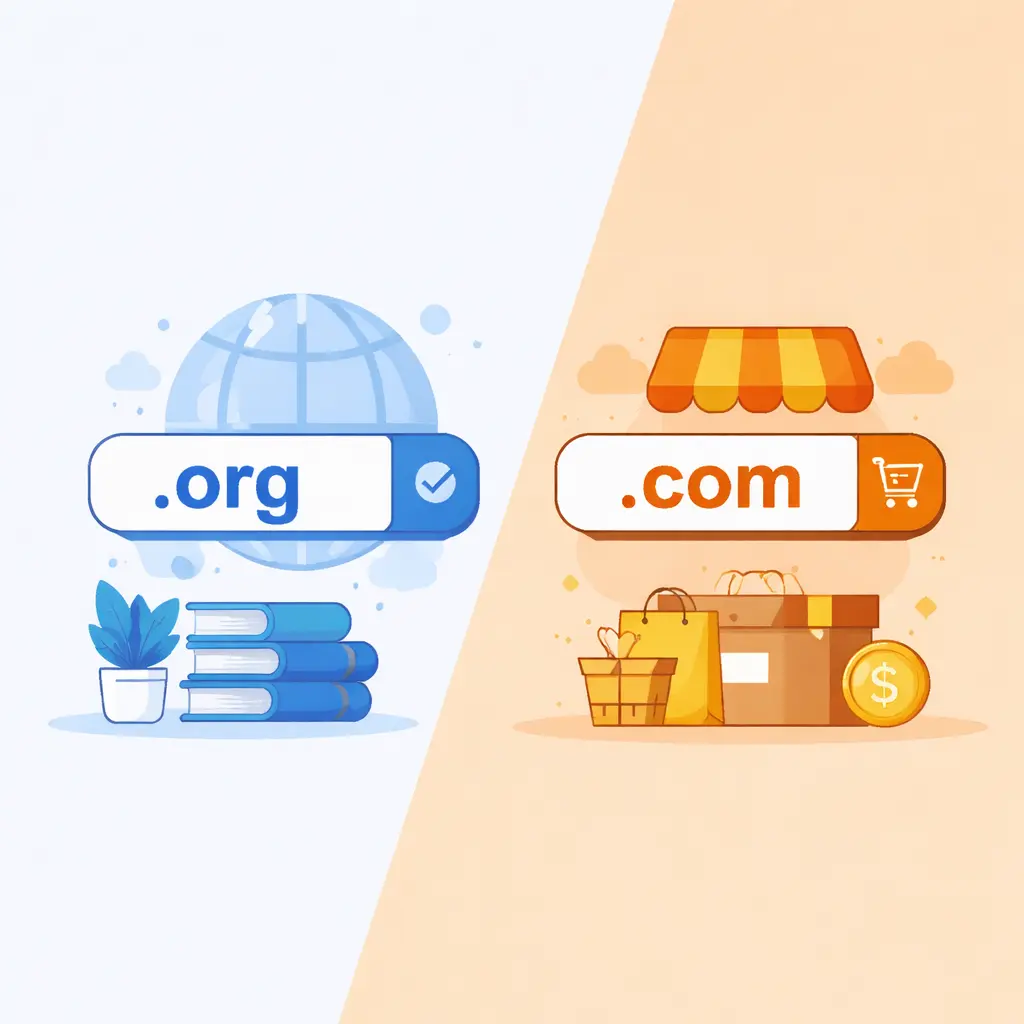
Choosing the right top-level domain (TLD) is a small but important branding and technical decision that affects trust, perception, and sometimes search performance. This guide breaks down the practical differences between .org and .com, explains how each extension performs for organizations, businesses, and WordPress sites, and gives a clear checklist so you can pick the extension that supports your goals and growth strategy.
Table of contents
How .org and .com differ — quick overview
.com is the original commercial TLD and remains the default choice for businesses, e-commerce, and general-purpose sites. .org was created for organizations, especially non-profits, open-source projects, and community groups. Technically, both are generic top-level domains (gTLDs) and are treated the same by search engines; differences are mostly about perception, availability, and how users interpret your site before they click.
Key distinctions
- Perception: .com signals commercial or general-purpose intent; .org signals institutional, nonprofit, or community-focused intent.
- Availability: Many short .com names are taken, while some .org names remain available for organizations and projects.
- Pricing and renewals: Registry policies differ; both can be inexpensive, but promotional pricing and renewal hikes vary between registrars and TLDs.
- Branding: .com is often easier for users to remember, while .org can lend authority for mission-driven or educational content.
SEO and ranking considerations
From a pure search-engine standpoint, there is no intrinsic ranking advantage to using .com over .org or vice versa. Google treats all generic TLDs equally when it comes to ranking signals. What matters more are the usual SEO fundamentals:
- Quality content and topical relevance
- Backlink profile and referring domains
- On-page optimization (titles, headings, schema)
- Page speed, mobile friendliness, and technical health
However, selection of TLD can influence click-through rates (CTR). A .org may imply nonprofit status, which can increase trust for mission-focused queries, while a .com might get higher CTRs for commercial queries. That user behavior can indirectly affect performance.
Branding, trust, and user expectations
Your audience’s expectations should heavily influence the choice. Consider these brand and trust signals:
- Trust and credibility: For charities, community projects, and open-source initiatives, .org often communicates legitimacy. For e-commerce and SaaS, .com appears familiar and professional.
- Memorability: Users tend to default to .com if they don’t remember an extension. If brand recall is a priority, a .com is safer.
- Expectation mismatch: A for-profit SaaS using .org might confuse visitors; conversely, a large nonprofit using .com could appear commercial.
Technical and WordPress-specific considerations
As a WordPress developer, you should treat .org and .com identically from an implementation perspective. Both support HTTPS, CDN routing, and WordPress hosting platforms without limitation. Still, a few practical points matter during setup and maintenance:
- SSL/TLS: Obtain an SSL certificate and configure HTTPS regardless of TLD.
- Site URL settings: In wp-config.php and Settings → General, ensure siteurl and home use the correct domain and protocol.
- Search Console and Analytics: Add and verify the exact domain (with and without www) in Google Search Console and update property settings after any domain changes.
- Multisite and domains: For WordPress multisite, map domains carefully and manage network settings per site to avoid wrong canonical links.
- Email deliverability: Use consistent domain email addresses and configure SPF, DKIM, and DMARC to reduce deliverability issues—this is independent of .org/.com but crucial for trust.
When to choose .org
- You’re a nonprofit, charity, or community organization and want to signal mission-driven intent.
- You run an open-source project, educational resource, or membership association.
- Your preferred .com is unavailable and a .org name matches your organizational identity better than other gTLDs.
- You want to leverage perceived credibility for fundraising and volunteer recruitment.
When to choose .com
- You operate a commercial business, e-commerce store, or SaaS product where consumer expectation favors .com.
- You prioritize brand recall and want the most familiar TLD for general audiences.
- International reach: .com is globally recognized and less likely to be associated with a specific country or sector.
Practical examples
These examples show typical choices that align with user expectations:
- Local charity: example.org — signals nonprofit and community focus.
- SaaS startup: example.com — supports commerce and product marketing.
- Open-source library: projectname.org — emphasizes community stewardship.
- Retail marketplace: brandname.com — builds commercial credibility and easier recall.
Alternatives and hybrid strategies
If neither TLD fits perfectly, consider these strategies:
- Buy both .com and .org: use one as primary and the other to redirect with 301s to protect your brand and capture type-in traffic.
- Use country-code TLDs (ccTLDs) only when targeting a specific market—otherwise, they can harm global recognition.
- Consider new gTLDs (.shop, .tech) only if they strengthen brand messaging and are easy to remember for your audience.
Domain migration checklist for WordPress (if switching TLDs)
- Backup the entire site (files + database).
- Purchase and configure the new domain with DNS and hosting.
- Install SSL certificate and force HTTPS in WordPress.
- Search and replace URLs in the database safely (use WP-CLI or a reliable plugin).
- Set up 301 redirects from old domain to new domain (preserve link equity).
- Update canonical tags and sitemap to the new URLs and resubmit sitemap to Google Search Console.
- Update Google Analytics property settings and any third-party integrations.
- Notify partners, backlinks owners, and update social profiles and marketing materials.
- Monitor traffic, indexing, and crawl errors for several weeks.
Cost, availability, and legal considerations
Registration cost differences are usually small, but watch for promotional pricing versus renewal rates. Check trademark databases to avoid infringement—registering a domain identical to a protected trademark can cause legal complications regardless of TLD. If you represent a regulated organization, ensure your domain choice and messaging comply with sector regulations.
Final recommendations
There’s no universally “better” TLD — choose based on audience expectations and brand goals. Use this decision rule:
- If your primary goal is commercial sales, consumer trust, and broad recall → prefer .com.
- If your site represents a nonprofit, community project, or institution where mission and credibility matter → consider .org.
- If possible, secure both and redirect the secondary domain to the primary to protect brand and capture type-in traffic.
From a WordPress perspective, both extensions are equally supported. Focus your technical and SEO efforts on content quality, site performance, and link-building—these drive long-term success far more than the choice between .org and .com.
Conclusion
Decide on the domain extension that best aligns with how you want users to perceive your site. Match your audience expectations—use .com for commercial, consumer-facing brands and .org for mission-driven, nonprofit, or community sites. If branding or availability creates doubt, own both TLDs and use redirects to consolidate traffic and protect your name. Implement sound WordPress and SEO practices to ensure whichever domain you choose supports visibility, trust, and growth.